Cardiac apprehension does not provide you a wedding rehearsal. When it occurs, the person that starts breast compressions and utilizes an AED comes to be the bridge in between life and fatality. That truth is why accreditation issues. A CPR course with the best accreditation does greater than hand you a card. It provides you a tested curriculum, credible analysis, and the confidence that your skills straighten with existing proof and neighborhood needs. I have trained health and wellness experts, college staff, and parents for more than a decade. The distinction between a certified cpr course and a common workshop appears when stress and anxiety is high, the flooring is crowded, and a person's liked one is transforming blue.
Accreditation, accreditation, and recognition: the language that journeys individuals up
People often mix 3 terms with each other as if they indicate the same thing. They do not. Accreditation is the process through which an independent body evaluates a training supplier or a certain program versus an approved criterion. Certification is the individual document you get that says you satisfied the requirement for a specified duration. Acknowledgment is how employers, regulators, and insurance providers treat that qualification. You want all 3 to line up. A credible first aid and cpr course is approved to a released requirement, problems a certification that clearly mentions the level you achieved, and is recognized by your employer or governing agency.
Across countries, the bodies doing accreditation differ. In the United States, the American Heart Organization (AHA) and the American Red Cross rest at the facility for CPR and Basic Life Assistance (BLS) programs, while some states include their very own demands for child care employees or lifeguards. In Australia, Registered Educating Organisations (RTOs) deliver systems of expertise such as HLTAID009 Supply cardiopulmonary resuscitation and HLTAID011 Provide first aid under the national framework. In the UK, the Resuscitation Council UK establishes clinical standards, while Ofqual-regulated granting organisations accredit lots of first aid courses. Similar patterns exist throughout Canada, New Zealand, and parts of Europe, each with its own mix of national regulatory authorities and private or philanthropic companies. If a supplier can not explain which criterion they straighten to and that audits them, keep looking.
Why the badge on your certification changes outcomes
Accreditation is not a tag for advertising copy. It drives the material, the instructor's credentials, the time spent on hands-on method, and the way your capability is assessed.
In one workplace I saw, personnel had attended a quick, non-accredited session offered as a "CPR recognition class." When a professional broke down months later, the very first -responder was reluctant. She bore in mind a memorable acronym yet had never ever pushed to the right depth on a manikin, and she was not sure concerning the rate. The emergency situation solutions dispatcher needed to trainer her via every action. She did her best. But the voids were obvious.
Contrast that with a storehouse group that had finished an accredited first aid and cpr course through a reliable carrier. 2 people acknowledged agonal breathing, started compressions within secs, sent a jogger for the AED, and revolved every 2 minutes to keep high quality. The AED provided one shock on initial analysis, and by the time paramedics showed up, the patient had a perfusing rhythm. Skill wedding rehearsal, practical situations, and instructor responses changed the arc of that day.
Quality control is the quiet power of certification. It standardizes the minimal hours on task, ties the program to existing resuscitation guidelines, and insists on measurable efficiency criteria. It additionally calls for documented danger monitoring for practical sessions, upkeep of devices like AED instructors and adult, kid, and infant manikins, and moderated analyses that maintain pass marks honest.
The core elements a certified CPR course must include
A legitimate cpr training program does not sink you theoretically, after that rush the method. It balances succinct science with detailed repeating. Despite the brand on the wall, seek these first aid Rockhampton components woven into the training course:
- Clear alignment to current resuscitation standards, with the publication year specified on products. If a service provider does not cite the guideline version, it is hard to recognize what you are learning. A specified extent, for instance adult CPR just, or adult, kid, and baby CPR and choking monitoring. Your first aid certificate need to spell this out. Hands-on time with objective comments. Compression depth and price are not guesswork. Manikins with responses tools or trainer tracking bring your technique right into the secure zone. AED use that exceeds "transform it on." You should practice pad positioning on different physique, secure clearing up, and fixing common problems like hair, sweat, or implanted devices. Assessment versus released standards. You need to know what you need to show to pass. If no evaluation is called for, you are not making a certificate that indicates much.
A good carrier additionally establishes realistic assumptions around the cpr correspondence course interval. The majority of identified programs are valid for 12 months for CPR skills because psychomotor abilities degeneration swiftly. First aid systems that include bleeding control, burns, and fracture management could hold for approximately three years in some regions, but several offices still call for annual refresher courses for CPR. Ask your company or licensing body what tempo they anticipate, after that match your booking to that cycle.
How certification differs by role: public, office, and professional settings
The right training course is not the exact same for every student. A moms and dad who wants abilities for the home requires different deepness than a paramedic student. The trick is to choose the level that matches your threat profile and regulatory setting, without paying for components you do not need.
For the public, neighborhood CPR or first aid and cpr courses usually cover adult compressions and AED usage, with a choice to add child and baby modules. Period runs 2 to four hours. The most effective of these classes still keep certification to nationwide standards, keep trainer proportions sensible, and give a basic first aid certificate that a company would recognize.
Workplaces require to map course option to dangers and responsibilities. A low-risk office might only require a couple of staff with accredited first aid training and a cpr course updated yearly. A childcare facility, swimming pool, or making flooring faces higher danger. Child care regulatory authorities often need pediatric CPR consisting of baby choking monitoring and anaphylaxis feedback. Aquatic facilities desire oxygen shipment and spine safety measures. Construction might add injury components for significant blood loss and crush injury. Many companies partner with a supplier like First Aid Pro or comparable companies that can tailor content while keeping certification undamaged. That equilibrium issues. If a personalized situation differs the accrediting body's extent, the certification may not meet audit requirements.
Clinical settings such as hospitals and dental facilities generally mandate BLS or ALS/ACLS from particular recognizing companies, restored on a set timetable. The analysis is more stringent. Expect two-person CPR technique, bag-mask air flow, group interaction, and scenario-based testing. If you are a clinician, check your board or healthcare facility credentialing office before you book. They often note the specific cpr courses they accept.
How to vet a service provider beyond the logo on the brochure
Logos can be accredited. Track record can not. When I evaluate a service provider for a service or school, I look much past the headline brand name. I examine trainer qualifications, equipment upkeep logs, analysis rubrics, and student-to-instructor ratios. I check out recent individual feedback, not the best hits from five years ago. I call and ask tough inquiries concerning their situation realistic look, AED practice, and how they sustain students that battle. The responses expose culture.
A few specifics to verify in plain language:
- Who certifies your cpr training, and what guideline year do you comply with? Search for a clear, current reference to the local resuscitation council or equivalent. What is the instructor-to-student proportion throughout hands-on technique? Proportions higher than 1:12 typically thin down comments. I aim for 1:8 or far better for newbies, specifically when pediatric skills are included. Do you utilize feedback-enabled manikins? Devices that measure deepness and rate assist learners right errors quickly. If not, what is your technique for objective feedback? How long is the certificate legitimate, and does it satisfy my market's recognition demands? Get this in creating, with course codes where relevant, such as HLTAID009 for Australian CPR units. What happens if a trainee does not satisfy the criterion on the day? A major service provider uses remediation or re-assessment alternatives, not a peaceful pass.
That list mirrors what auditors ask when they examine training documents after an event. It also mirrors what students need for real proficiency: time, responses, and clear expectations.
The makeup of a top quality certificate
A first aid certificate or CPR card that stands up in an audit shares typical attributes. The provider's legal name and accreditation details show up in ordinary view. The program title and, where applicable, the national device code are spelled appropriately. The range specifies adult, child, and baby coverage when relevant, not simply a common "CPR." The concern day and expiration or advised renewal duration are both existing. The student's complete name matches federal government ID.
I have seen people turned away from work websites due to the fact that their certificate did not have a code or expiration. It is an avoidable irritation. If you get an electronic certification, make certain the PDF is verifiable by QR code or serial number. More employers currently cross-check credibility since deceitful certifications flow in some areas. Liable providers have accepted confirmation portals, which secure both students and employers.

Blended, on the internet, and in-person: what layouts function and what to watch
Blended discovering has actually grown. Pre-course online modules can deliver theory successfully and free classroom time for technique. When done well, this format enhances outcomes due to the fact that learners arrive with a standard vocabulary and can spend even more time with manikins and AED instructors. When done improperly, it becomes a box-ticking exercise where people click with slides and guess quiz responses before the real work begins.
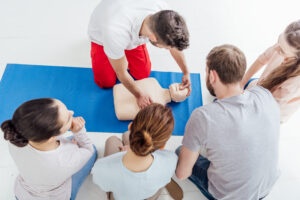
Entirely on the internet CPR courses are not suitable for first certification since CPR is a psychomotor skill. Reputable certifying bodies insist on in-person analysis of compressions, ventilations where educated, and AED usage. If a site assures a complete first aid and cpr certification Website link without hands-on part, be doubtful. Some regions allow online-only cpr correspondence course web content for theory updates, however they still require an in-person skills check within a defined home window. Validate what your jurisdiction and sector accept.
For in-person distribution, class atmosphere matters. A cramped room with one adult manikin for twelve students types passive viewing, not learning. A well-run session revolves trainees through adult, kid, and baby stations, and includes sensible challenges. For example, practicing AED pad placement around a transdermal spot or implanted pacemaker scar prepares you wherefore takes place in the field. Running a circumstance in a hallway educates you to take care of spectators and ecological risks. These information are not fluff. They shape muscle memory and judgment.
How guideline updates surge into program quality
Resuscitation standards upgrade on a five-year cycle in several nations, with acting advisories as evidence develops. Adjustments are commonly refined instead of remarkable. Emphasis may change to decrease disturbances in compressions, fine-tune hand positioning, or broaden suggestions on when to quit resuscitation. Approved service providers upgrade their curriculum, evaluations, and teacher training when guidelines change. That procedure takes job and investment.
I bear in mind the transition when comments devices ended up being much more typical. In the beginning, some teachers resisted, arguing that their qualified eye sufficed. After that they saw the information. Numerous students that looked experienced were under pressing by a centimeter or fatiguing early. The tools did not replace trainers. They equipped them. Certified programs adopted the technology quicker due to the fact that their audit frameworks rewarded unbiased measurement. Non-accredited workshops delayed, and their students paid the rate in lower-quality compressions when it counted.
When you restore your cpr certificate, ask what has actually transformed considering that your last course. A thoughtful instructor will certainly explain updates and, much more importantly, discuss the thinking behind them. Understanding the why locks in the memory much much better than a guideline without context.
The edge situations you wish you never ever fulfill, and how accreditation prepares you
Real life is unpleasant. You could kneel close to a large patient on a slim stairwell. You can locate a young child with a grape lodged deep and a panicking moms and dad wailing behind you. You could need to puncture wet garments to place AED pads while rain drums on a metal roof.
Accredited training does not assure to stage every feasible circumstance, but it does insist on teaching concepts you can adjust:
- Start compressions early, and minimize stops briefly. That solitary regulation has outsized effect across settings. Use an AED as soon as it shows up, and do not delay shock shipment with additional steps. Clear communication comes to be the safety net. Adjust technique for infants and small children, and trainer distressed relative while you function. Knowledgeable teachers demonstrate the voice and body movement that de-escalate chaos. Recognize reversible causes and threats, from drowning and hypoxia to electrocution. Good courses weave these into situations as opposed to adding them on as trivia.
I have actually watched students take on a simulated choking baby with shivering hands in class, then do the same series with the tranquil focus of someone that has existed when it occurred genuine. That change comes from exercise with feedback, from trainers who have sufficient area and time to instructor rather than rush. Certification develops the conditions for that training to occur.
When cost and ease pull in the contrary direction
Price varies extensively. I see neighborhood CPR courses provided for less than the expense of a takeout dinner, and industry-specific first aid courses climbing numerous hundred dollars when progressed components or on-site distribution are involved. Time spent issues too. A two-hour session is easier to schedule than a full day. Individuals evaluate the compromises.
From a customer's seat, a reduced rate is not immediately a warning. Large carriers with scale can keep fees down and still preserve high quality. Discount rates for groups or for partnering with a first aid pro level carrier can additionally bring expenses to a reasonable location. The warning sign is opacity. If you can not see what certification the course lugs, for how long it runs, how assessment works, and what your first aid certificate includes, the cost factor loses definition. Clear providers information their incorporations and exemptions, and they explain travel and cancellation policies up front.
Convenience fits. Combined formats lower time away from the work environment. Night and weekend courses aid moms and dads and shift workers. Mobile fitness instructors that pertain to a website can incorporate your tools and layout into scenarios, which pays off when emergency situations take place in those exact corridors. Simply make certain the certification follows you. On-site distribution must still meet the same criteria, with the same tools and assessment, to issue identified cpr courses certificates.
Red flags that signal a hard pass
A couple of patterns consistently forecast disappointment. Look for providers who promise guaranteed passes without stating evaluation requirements. Beware if they dismiss hands-on practice as optional, or if they market a first aid course legitimate for five years without any refresher courses. If evaluations discuss chock-full spaces, rushed guideline, or damaged manikins, think them. If your questions regarding recognition get obscure responses, or if the service provider bushes on whether your company will approve the certificate, leave. It is less costly to rebook than to discover first aid and cpr courses Subiaco on audit day that your documentation is worthless.
How companies can make certification work for them
If you manage a group, build a basic matrix that links job functions to called for training and revival intervals. Usage program codes where your jurisdiction has them. Store copies of first aid and cpr course certificates in a centralized system with reminder triggers at 90, 60, and thirty days before expiry. When you alter suppliers, map equivalencies. For instance, if you move from one certifying body to one more, validate that your regulator accepts both, and keep in mind any distinctions in scope. During induction, ask new hires for their current certifications and verify them with the company's portal. It takes mins and avoids surprises.
Consider running short, scenario-based refresher courses between formal revivals. Ten mins at a team conference to practice calling for aid, finding the AED, and starting compressions in your actual space transforms understanding right into muscular tissue memory. It also exposes gaps, like an AED secured an office after hours. An accredited supplier can help you create these drills so they match as opposed to change official cpr training.

The course for people: choosing well, discovering deeply, maintaining skills alive
If you are picking a course on your own, start with your objective. Do you require a certificate accepted by your company, or are you looking for abilities for family security? In any case, pick an approved program. Review the course summary very closely. Ensure it covers the populaces you respect, whether adult only or grown-up, kid, and infant. If you have a newborn or help take care of a grandparent, ask for technique time with those particular manikins. Reserve sooner than you think. Emergencies do not delay up until your timetable clears.
During the course, be a demanding learner in the best sense. Request for comments till you can hit target deepness and rate for 2 minutes right without wandering. Practice switching with a partner at the right time. Use the AED instructor greater than when. If something feels uncomfortable, claim so. Excellent instructors adjust your stance, your hand placement, and your breathing technique until it clicks. That is their craft.
After you gain your first aid certificate, make a reminder to review at the midway mark before expiration. Go through the march loud. Locate the AED at the office, at the fitness center, at your youngster's college. If your carrier provides a quick cpr correspondence course or abilities check, take it. Abilities fade silently. Refresher courses bring them back to the front of your mind, right where you require them.
The quiet value of society and character
Accreditation actions framework. Character comes from individuals that instruct you. For many years, one of the most effective instructors I have actually dealt with share a few characteristics. They are calm, accurate communicators. They lug lived experience without theatrics. They fix with respect and push for mastery since they understand just how it feels to stoop on a cold floor and wish your hands bring someone back. When you discover a service provider who grows that culture, stick with them. Your certification will certainly hold weight on paper. Your abilities will hold weight in the moment.
Accreditation gets you to the ideal community. Focus to scope, evaluation, and renewal cadence maintains you on the appropriate road. The dedication to exercise and responses puts you at the appropriate front door when it matters most. Whether you are booking first aid training for a company, signing up in cpr courses as a new parent, or lining up a work environment's yearly cycle of first aid courses, purchase the requirement that takes on scrutiny and tension. A person you might never fulfill is depending on that choice.